Fighting Ebola in Congo: How Catholic Relief Services Is Stepping Up Where Others Have Stepped Back

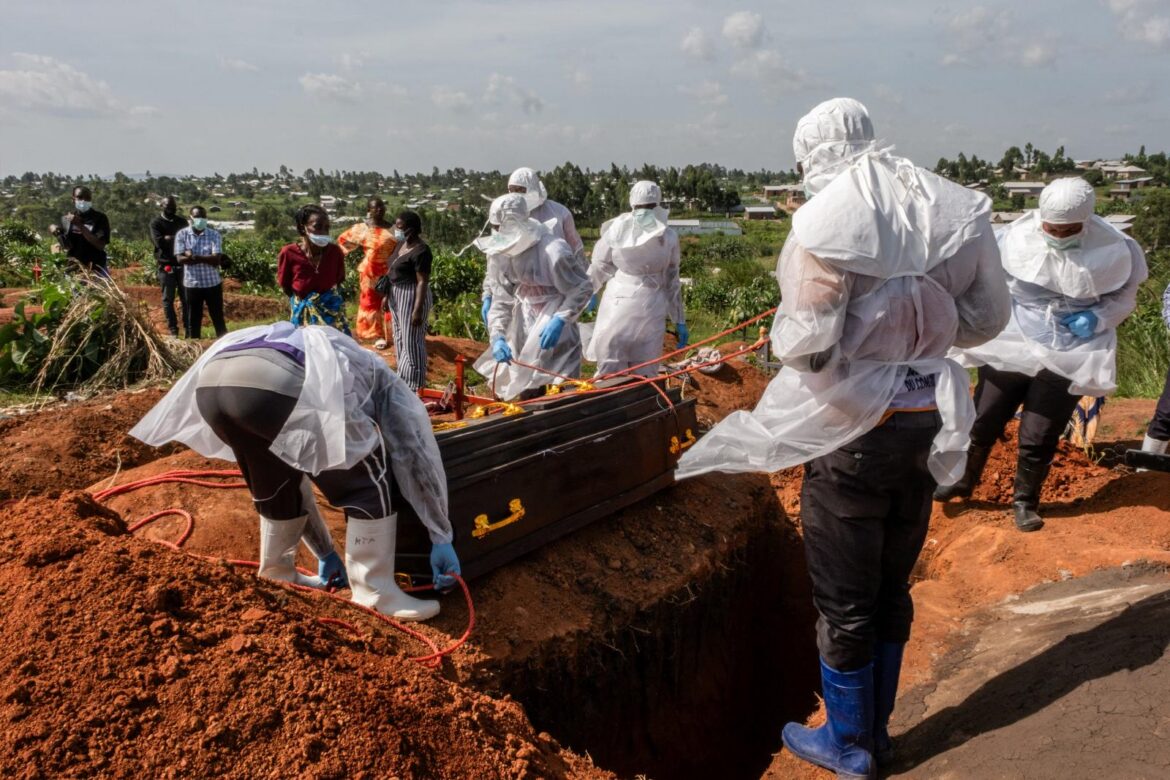
When a deadly disease begins spreading through communities where families already struggle to survive, every delay costs lives. Right now, an Ebola outbreak in central Africa is testing the limits of global health systems — and exposing the very real consequences of reduced American involvement in international humanitarian work.
The outbreak, centered in the Democratic Republic of Congo and spreading into neighboring Uganda, involves the Bundibugyo strain of Ebola — a rare and particularly dangerous variety of the virus for which there is currently no approved medication or vaccine. According to the World Health Organization, 344 confirmed cases have been recorded in Congo, with at least 60 deaths reported so far.
This is the first major Ebola outbreak since the Trump administration dismantled the U.S. Agency for International Development, or USAID — the primary American agency responsible for responding to global health emergencies. Its remaining functions were folded into the State Department, and the U.S. also withdrew from the World Health Organization last year.
Catholic Relief Services Moves Quickly to Help
Into this gap stepped Catholic Relief Services, the overseas humanitarian arm of the Catholic Church in the United States. CRS has been working to support local partners on the ground in Congo, mobilizing resources for the communities most at risk.
Rafaramalala Volanarisoa, CRS head of office in Congo, described the organization's response in a June 3 interview, saying CRS "mobilized quickly" to help its local partners. The group is actively raising funds for food, medical supplies, and one of the most basic but critical needs of all — clean water.
"There is a huge need for water: water to clean, clean beds, clean wards, clean hands," Volanarisoa said.
That simple need — safe water for hand washing and sanitizing care environments — can mean the difference between containing the virus and watching it spread further through already vulnerable communities.
The Absence of USAID Has Left Real Gaps
Aid workers and critics of the administration's foreign aid cuts have pointed to the absence of USAID as a contributing factor in the outbreak's slow early detection and the fragmented coordination between relief organizations now working on the ground.
During Senate Foreign Relations Committee testimony on June 2, Secretary of State Marco Rubio pushed back against concerns raised by Sen. Cory Booker, D-N.J., about U.S. preparedness for disease outbreaks. Rubio said flatly, "I don't agree with that assessment."
But the people doing the work in Congo tell a different story. While Volanarisoa praised the efforts of organizations on the ground, she acknowledged there are challenges tied directly to USAID's absence — particularly in disease surveillance data collection and sharing.
"There are really some gaps," she said, though she noted that the distribution of surveillance data has started to improve despite a delayed start.
Misinformation Is Making a Dangerous Outbreak Worse
Beyond the logistical challenges, aid workers are facing something perhaps even harder to overcome: widespread disbelief that the outbreak is real at all.
Communities in the affected region have grown deeply distrustful of outside response teams. Some residents believe the disease is fabricated — invented as an excuse for aid organizations to collect money. The memory of large influxes of resources and personnel during the COVID-19 pandemic, without people feeling the direct benefit in their own lives, has fueled that suspicion.
"Misinformation — the fact that people do not believe that there is an outbreak, they don't believe that this is deadly," Volanarisoa said, is among their biggest challenges.
"There's a lot of mistrust of response actors," she said. "They believe that it's a fabricated disease for response actors to get money, and that this results from COVID; there are lots of monies that poured in the region. There are lots of new cars and people moving around, and they did not really see, they did not really have trust in those response actors."
The consequences of that mistrust can be deadly. On June 1, an Ebola burial team working in Congo's eastern South Kivu province was attacked. The workers were forced to abandon a coffin — an event that health officials fear could accelerate the virus's spread.
WHO Director-General Tedros Adhanom Ghebreyesus addressed the trust problem directly during a June 3 press conference, calling community engagement essential to stopping the outbreak.
"Community mistrust is a serious barrier," Ghebreyesus said. "Some community leaders told me that they believe Ebola is not real."
CRS is working to change that — by turning to a trusted institution already embedded in these communities: the Catholic Church. The organization has been reaching out to bishops and local priests, asking them to use their moral authority and their pulpits to deliver a life-saving message.
Volanarisoa said CRS has been in communication with the bishops and priests of local dioceses to ask them "to speak up and (communicate) in church that yes, Ebola is real."
A Controversy Over How America Protects Its Own Responders
A separate and growing controversy has emerged around U.S. policy regarding American citizens who are exposed to Ebola while working in the outbreak zone. Rather than being brought home to specialized treatment facilities in the United States, those individuals would be transferred to a quarantine facility in Kenya or countries in the European Union under a new U.S. policy.
A group of American healthcare officials sent an open letter to Congress on June 1, raising serious objections to the plan.
"This policy raises profound clinical, ethical, operational, and legal concerns," the letter said, noting that the U.S. has already "demonstrated that safe repatriation is both feasible and effective." It warned the new policy risked undermining the Ebola response, stating, "If responders believe they may be denied access to optimal medical care should they become ill, many will understandably reconsider whether they can safely serve."
The concern is practical as well as ethical: if aid workers fear they won't receive the best possible care should they fall ill, fewer people may be willing to go to the front lines at all — leaving communities in Congo and Uganda with even less support.
The U.S. Embassy in Kenya defended the facility in a June 2 statement, saying the bio-isolation site in Laikipia is "part of a holistic response to prevent spread of the disease and lessen health risks for the region as a whole" and "does not pose risk to nearby communities."
In a June 3 update, the State Department said it is working "in close coordination with the U.S. Centers for Disease Control and Prevention (CDC), and in partnership with the governments of the Democratic Republic of the Congo and Uganda" to mount what it described as "a rapid and comprehensive response to the Ebola outbreak."
"The Department's highest priority remains protecting the health of the American people and preventing this Ebola outbreak from reaching our shores," the memo said.
Meanwhile, the families and children in the communities at the center of this outbreak — many already living in extreme poverty, displacement, and conflict — continue to face an invisible and deadly threat, and depend on the work of organizations like CRS to help them survive it.