Trump is Publicly Attacking The Pope — Here's What It Means for Americans

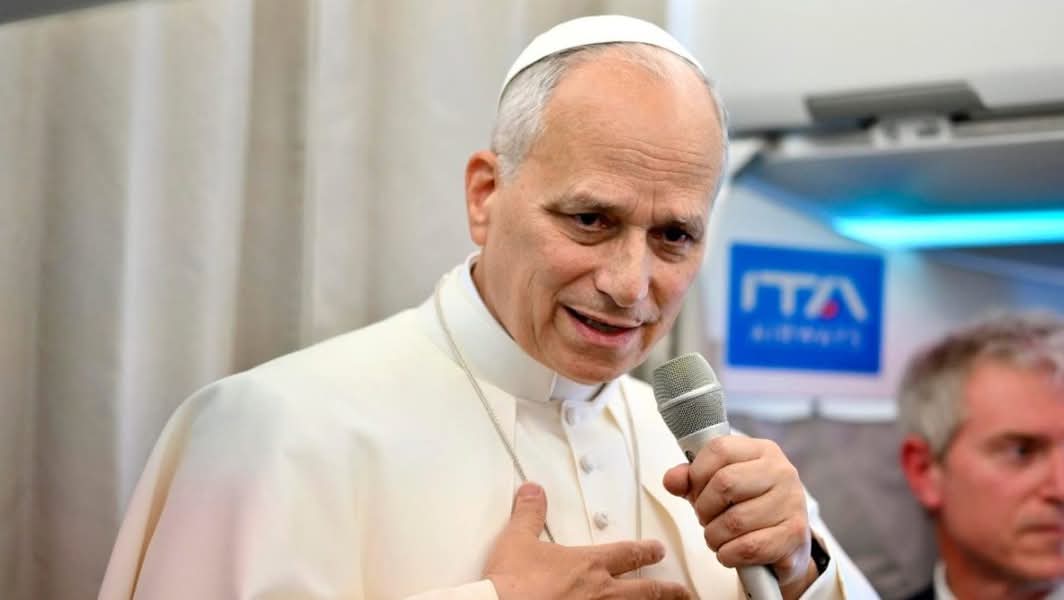
The President of the United States is publicly attacking a sitting Pope for teaching the Gospel. Not for a financial scandal. Not for political interference. For preaching mercy, calling for peace, and asking the powerful to consider the cost of war on human lives.
Donald Trump has labeled Pope Leo XIV "weak," accused him of being influenced by the "Radical Left," and told the leader of the world's 1.4 billion Catholics to "focus on being a Great Pope, not a Politician." Vice President JD Vance piled on, telling the Pope to "stick to matters of morality" — apparently not recognizing the deep irony of telling the Pope that war and the sanctity of human life fall outside his lane.
What had Leo XIV done to earn this response? He quoted Jesus.
A Pope Who Speaks Like One
Born Robert Francis Prevost — the first American-born pope in history — Leo XIV was elected on May 8, 2025, and has wasted no time making clear what kind of pope he intends to be. His very first words from St. Peter's Balcony set the tone: "Peace with you all … the first greeting of the risen Christ, the Good Shepherd who gave his life for the flock of God." The following week, addressing journalists, he quoted the Sermon on the Mount: "Blessed are the peacemakers."
These are not radical ideas. They are the red-letter words of Christ himself.
The breaking point came over Easter weekend, one of the most sacred periods in the Christian calendar. While Trump was publicly threatening Iran with military strikes — including the potential destruction of its infrastructure and what he described as the possible "eradication" of a "whole civilization" — Leo was at the Vatican delivering a Palm Sunday homily. He described Jesus as the "King of Peace" and warned that God "does not listen to the prayers of those who wage war." He pointed to the ongoing bloodshed in Ukraine and Gaza, and called Trump's Iran threats "truly unacceptable."
Trump responded not with reflection, but with a social media attack.
"I Don't Want a Pope Who Criticizes Me"
In his own words, Trump made his position plain: "I don't want a Pope who criticizes the President of the United States because I'm doing exactly what I was elected, IN A LANDSLIDE, to do." He also claimed — without credible basis — that the Vatican chose an American pope specifically to manage its relationship with him, writing that Leo "wasn't on any list to be Pope" before the Church elevated him as a diplomatic maneuver.
The claim has no known factual support. What it does reveal is a sitting president's apparent belief that the papacy should operate in deference to American political power — and that a religious leader who fails to do so is somehow out of line.
Leo's Record Speaks for Itself
Long before becoming pope, Prevost was living out a faith with real-world consequences. He served for years as a bishop in Peru, walking alongside some of the most marginalized communities in the world. In 2022, he publicly condemned Russia's invasion of Ukraine as an "imperialist" act of conquest — a position rooted not in politics but in a consistent commitment to human dignity and sovereignty.
As a cardinal in early 2025, he shared an article challenging JD Vance's framing of Christian love as something that should be ranked or rationed based on national origin. The headline read: "JD Vance is wrong: Jesus doesn't ask us to rank our love for others." For a senior Church official to weigh in that directly was notable. But the theological argument itself is about as mainstream as Christianity gets — the Parable of the Good Samaritan is not an obscure text.
Since his election, Leo has spoken consistently about Gaza, Ukraine, and global conflict through a framework of Gospel-rooted peace and justice. He has also made a deliberate choice to address the world primarily in Italian and Spanish rather than English — a signal, widely interpreted, that he understands his calling as global shepherd, not American representative.
The Pope's Response: Undeterred
Speaking to reporters while traveling to Africa, Leo XIV addressed the confrontation with the kind of calm that tends to unnerve those who expect capitulation.
"To put my message on the same plane as what the president has attempted to do here, I think is not understanding what the message of the Gospel is," he said. "I'm sorry to hear that, but I will continue on what I believe is the mission of the church in the world today."
He was even more direct when pressed: "I'm not afraid of the Trump administration, or of speaking out loudly about the message of the Gospel, which is what the Church works for."
What's Really at Stake
At its core, this is not a feud between two powerful men with competing egos. It is a collision between two entirely different visions of what faith is for.
One vision holds that religious leaders should affirm the powerful, comfort the comfortable, and refrain from inconveniencing political agendas. The other holds — as Christians have professed for two thousand years — that the Gospel compels its followers toward mercy for the vulnerable, justice for the oppressed, and an unflinching reckoning with the human cost of violence.
Pope Leo XIV is not doing anything new. He is doing exactly what pastors, priests, missionaries, and ordinary believers have always understood their faith to require. The remarkable thing is not that a pope is preaching the Sermon on the Mount. The remarkable thing is that a president is attacking him for it.